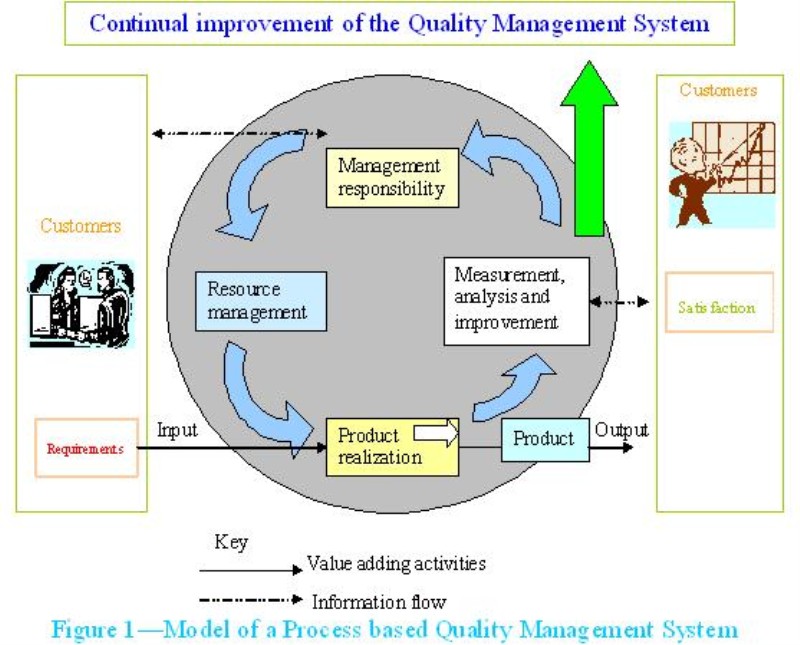
ISO 9001:2008 specifies requirements for a quality management system for any organization that aims to enhance customer satisfaction and demonstrate its ability to consistently provide products that meet customer and regulatory requirements. ISO 9001:2008 has been organized in a user-friendly format with terms that are easily recognized by all business sectors, and companies of all sizes.
Benefits of ISO 9001:2008:
ISO/TS 16949 certification is essentially auto components certification, detailing the fundamental, sector-specific, quality systems requirements that sustain continuous improvement and emphasize defect prevention while simultaneously reducing the magnitude of variation and waste in the supply chain. ISO/TS 16949 is implemented for all branches of manufacturers and suppliers of products or production material, services such as heat treatment, welding and galvanizing and other products specified by customers.
The Technical Specifications ISO/TS 16949:2009 combines all previous and published requirements of the U.S. and European automobile industry (QS-9000, VDA 6.1, AVSQ, EAQF 94) on the basis of the ISO 9001:2008, and is recognized by all major automotive companies including General Motors, Ford, Daimler Chrysler, Volkswagen, BMW, Fiat, Peugeot-Citroen, Renault, and many Japanese and Korean OEMs (Original Equipment Manufacturers).
AS/EN 9100 C and AS/EN 9120 standardize quality management system requirements for the aerospace industry from production to distribution. AS 9100 is the Aerospace Certification standard applicable for aerospace and defense suppliers and AS 9120 is for stockiest and distributors of aerospace products.
The aerospace industry is moving quickly towards requiring their suppliers to be AS 9100 compliant / certified. By becoming AS 9100 compliant / certified, suppliers not only gain a competitive advantage but achieve significant improvements in quality and safety, and reductions in cost, throughout the value chain. They also reap benefits from the improved processes and achieve continual improvement that is the foundation of ISO 9001:2008 certified Quality Management Systems
There is an increasing emphasis on triple bottom line of an organization. Triple bottom line, also known as People, Planet, Profit, means expanding the traditional company reporting framework to take into account environmental and social performance in addition to financial performance. ISO 14001 is the standard for environment certification which supports environmental protection and prevention of pollution in balance with socio-economic needs. It provides businesses with a structure for managing environmental operations, and applies to all types and sizes of manufacturing and service operations throughout the world.
Benefits of ISO 14001:
OHSAS 18001 is an Occupation Health and Safety Assessment Series certification for health and safety management systems, which enables an organization to control occupational health and safety risks and to improve performance. OHSAS uses the prevention concept, i.e. prevention instead of cure. This is integrated in the work protection law, and states the work safety and health protection should be treated in one complete system.
Benefits of OHSAS 18001:
ISO 22000:2005 specifies requirements for a food safety management system where an organization in the food chain needs to demonstrate its ability to control food safety hazards in order to ensure that food is safe at the time of human consumption. It is applicable to all organizations, regardless of size, which are involved in any aspect of the food chain and want to implement systems that consistently provide safe products.
Benefits of ISO 22000: